Building safety software
Building safety software for Higher-Risk Buildings
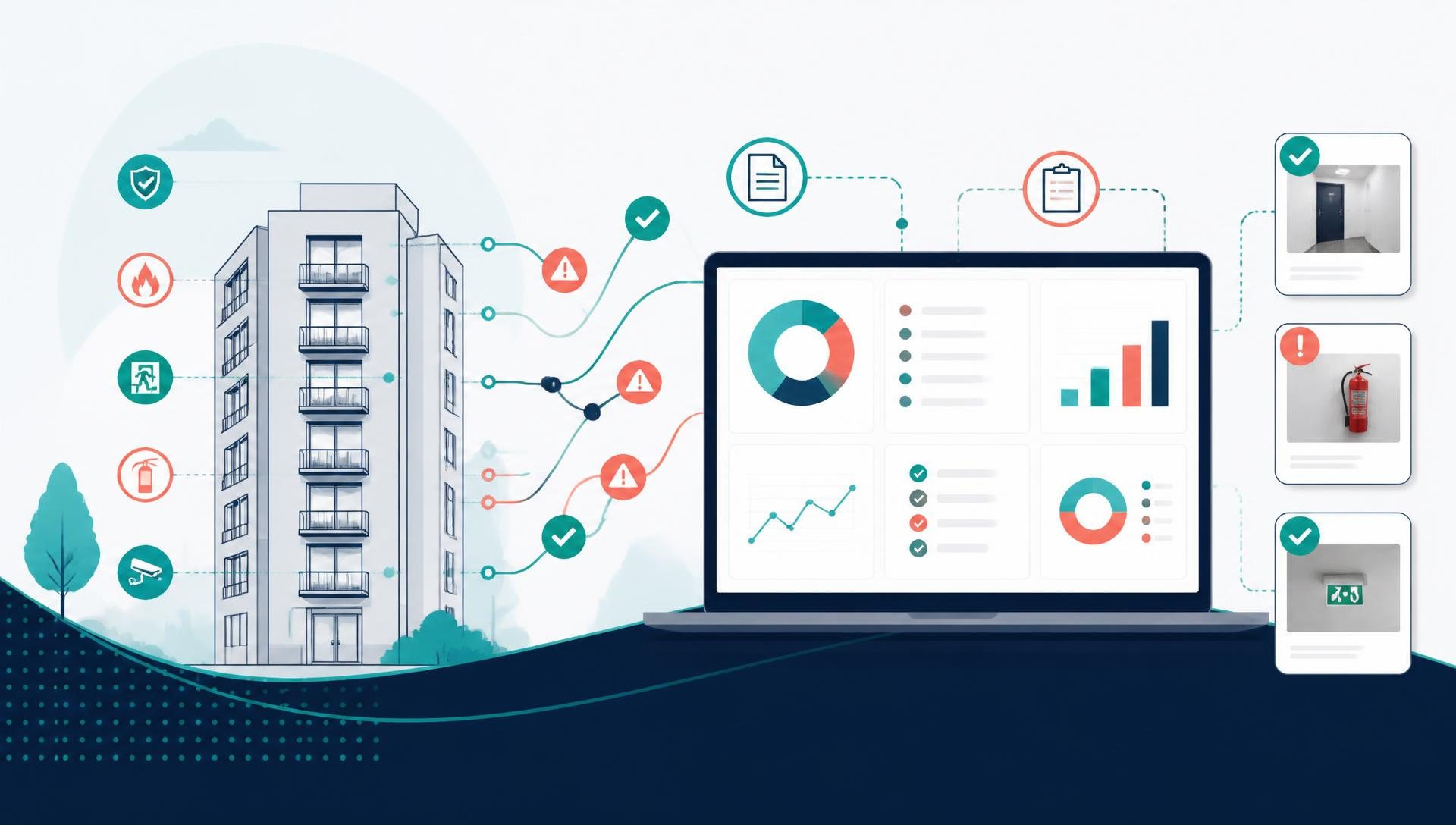
Cascade is building safety case software for Principal Accountable Persons, housing providers and building safety consultants managing higher-risk buildings under the Building Safety Act 2022. It connects hazard identification, bowtie risk assessment, controls, evidence, actions and safety case reporting in one live system.
Build the safety case, understand the risk and keep the evidence behind it up to date.
Book a demoWhat is building safety case software?
Building safety case software provides a structured way to identify and assess building safety risks, record the measures used to manage them and maintain the evidence that supports the building safety case.
Unlike a static safety case report, the software creates a live system connecting hazards, controls, evidence, actions and conclusions. This makes it easier to understand not only what information exists but what it demonstrates about the safety of the building.
How does Cascade help prepare a safety case report?
Cascade provides a structured route from understanding the building and its hazards through to producing the safety case report.
Users can identify major accident hazards, develop bowtie risk assessments, assess preventative and recovery controls, link supporting evidence, record gaps and actions and build the arguments that support the safety case.
The report is therefore an output of the risk assessment and evidence rather than a standalone document assembled at the end of the process. Our guide to what a good safety case report looks like explains what the Building Safety Regulator expects to see.
How does Cascade support the Building Safety Act 2022?
The Building Safety Act requires Principal Accountable Persons and Accountable Persons to assess and manage building safety risks relating to the spread of fire and structural failure in higher-risk buildings.
Cascade helps organisations organise the information, risk assessments, controls, evidence and actions used to demonstrate how those risks are being managed, including the information required for a Building Assessment Certificate application.
It also provides a structured record that can be maintained as the building, evidence and understanding of risk change, alongside the safety management system for the building. The early refusal rates under the Building Safety Act show how often submissions fall short.
How does Cascade support all reasonable steps?
A safety case needs to demonstrate more than the existence of safety measures. It should explain how the organisation has considered the risk and whether further measures are reasonably practicable.
Cascade helps users identify preventative and recovery controls, assess their effectiveness, identify weaknesses and record improvements or further actions.
This creates a transparent record of the reasoning behind risk-management decisions and helps the Principal Accountable Person demonstrate the steps being taken to prevent a building safety risk materialising and reduce the severity of an incident if it does.
How does Cascade use bowtie risk assessment?
Cascade has a built-in, step-by-step process for developing building-specific bowtie risk assessments, so users do not need to know how to build a bowtie before they start.
The process begins with the building itself. Cascade uses the building's Key Building Information (KBI) to suggest relevant hazards for consideration. Users then work through guided questions to identify credible threats and consequences and the preventative and recovery controls that manage them.
The guided process helps users assess how effective those controls are, identify gaps or weaknesses and link the evidence that supports their assessment.
The result is a structured, building-specific picture of what could go wrong, what is in place to prevent it and what would limit the consequences if it did, without requiring users to be bowtie or risk-assessment specialists.
How does Cascade manage safety case evidence?
Evidence can be linked directly to the risks, controls, claims and arguments it supports.
This may include fire strategies, structural assessments, surveys, drawings, inspection records, maintenance information, policies and other supporting documents. Where the regulator questions the evidence base, our article on insufficient evidence and whether another survey is needed sets out the options.
Rather than treating the evidence library as a document store, Cascade maintains the relationship between the evidence and the safety argument so users can see why a document matters and where it is being relied upon.
How does Cascade keep a safety case current?
A safety case should reflect the building as it exists today, not simply the information available when the report was first submitted.
Cascade allows evidence, assessments, actions and safety arguments to be updated as new information becomes available, work is completed or circumstances change.
Review dates, actions and assurance processes help organisations maintain the safety case through the life of the building.
Can Cascade manage multiple higher-risk buildings?
Yes. Cascade supports organisations managing individual higher-risk buildings and portfolios of HRBs.
Information can be managed at building and portfolio level, helping organisations understand progress, outstanding actions, evidence gaps and risk across their stock while retaining the building-specific assessment and reasoning that each safety case requires.
Is Cascade suitable for housing associations?
Yes. Cascade is designed for organisations responsible for managing higher-risk residential buildings, including housing associations, local authorities and other Principal Accountable Persons and Accountable Persons.
It provides a consistent framework across a portfolio while allowing the hazards, controls, evidence and safety arguments to remain specific to each building. See how building owners use Cascade.
Is Cascade suitable for building safety consultants?
Yes. Consultants can use Cascade to carry out structured safety case work with their clients, including hazard identification, bowtie workshops, evidence review, control assessment and safety case reporting.
The structured process helps consultants make their professional judgement visible rather than forcing different buildings into a generic report template. See how consultants use Cascade.
How is Cascade different from compliance software?
Compliance software is generally designed to track whether statutory activities, inspections and checks have been completed.
Cascade is focused on risk management and the safety case.
It helps answer a different question: what could go wrong in this building, what prevents it, what limits the consequences and what evidence demonstrates that those measures are effective?
Compliance information can provide important evidence, but completing a compliance activity does not by itself demonstrate that building safety risks are being effectively managed.
Can AI write a building safety case?
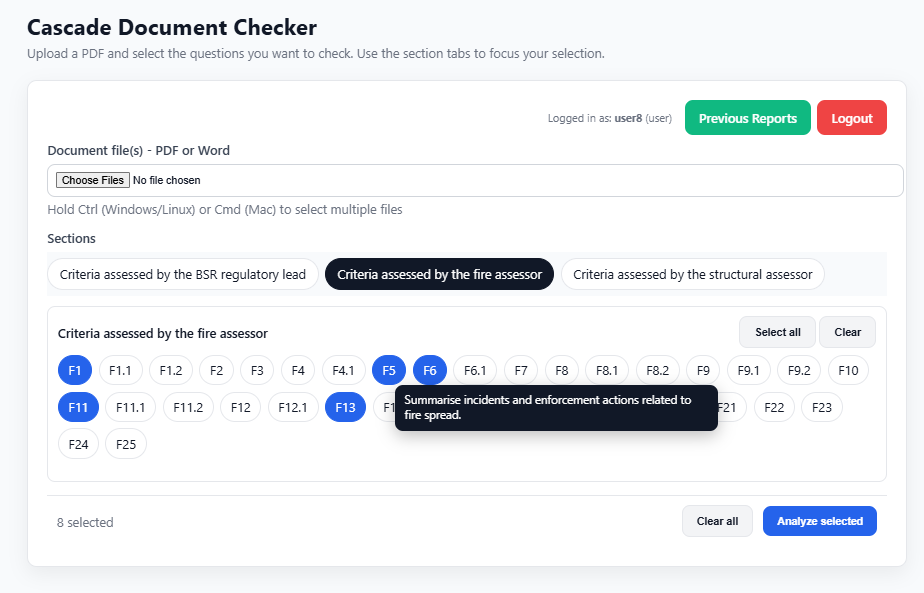
AI can help organise information, identify relevant evidence and assist with drafting but a credible safety case requires building-specific evidence, professional judgement and decisions about risk. We look at this in more detail in can AI write a building safety case?
Cascade does not treat the safety case as a document that can simply be generated by AI.
The system is designed to keep the organisation and its competent advisers in control of the assessment and the conclusions reached.
How does Cascade use AI?
Cascade uses AI to assist users with analysing and working with building safety information rather than replacing professional judgement. Our article on how AI can support building safety case preparation explains where it helps.
AI can help users interrogate information, identify relevant evidence and support efficient development of safety case content. The underlying hazards, controls, assessments and conclusions remain visible so that users can review, challenge and approve the reasoning.
For an independent, AI-assisted check of a completed safety case report, see Cascade Verify, our separate review service.
How does Cascade help with BSR RFIs and PRNs?
Requests for Information (RFIs) and Prompt Remedy Notices (PRNs) can expose gaps in evidence or areas where the safety case has not explained the risk clearly enough.
Because Cascade connects evidence to the relevant risks, controls and arguments, users can identify where additional information or explanation is needed and update the safety case accordingly. Our guidance on responding to a Prompt Remedy Notice sets out the timescales involved.
Actions can also be recorded and managed where a gap cannot be resolved immediately, helping distinguish between missing information, an identified improvement and an unmanaged risk.
What happens after the safety case report is submitted?
Submission should not be the end of the safety case process.
Buildings change, new evidence becomes available, actions are completed and the understanding of risk develops. The safety case should therefore be reviewed and updated throughout the life of the building.
Cascade keeps the underlying risk assessment, evidence, controls, actions and safety arguments together so the safety case can remain a live management tool rather than becoming a report that sits unchanged until the next regulatory interaction. Our article on stopping re-work when updating your safety case explains why that matters.
See Cascade with your own building in mind
We'll walk you through hazard identification, bowtie risk assessment, evidence and safety case reporting, and answer the questions specific to your buildings.